Body · Asana
Is Yoga Exercise?
How the modern fitness industry transformed the way the West understands yoga.
6 min read
Most of us meet yoga through the body. ezyogi explores what happens when you go deeper.
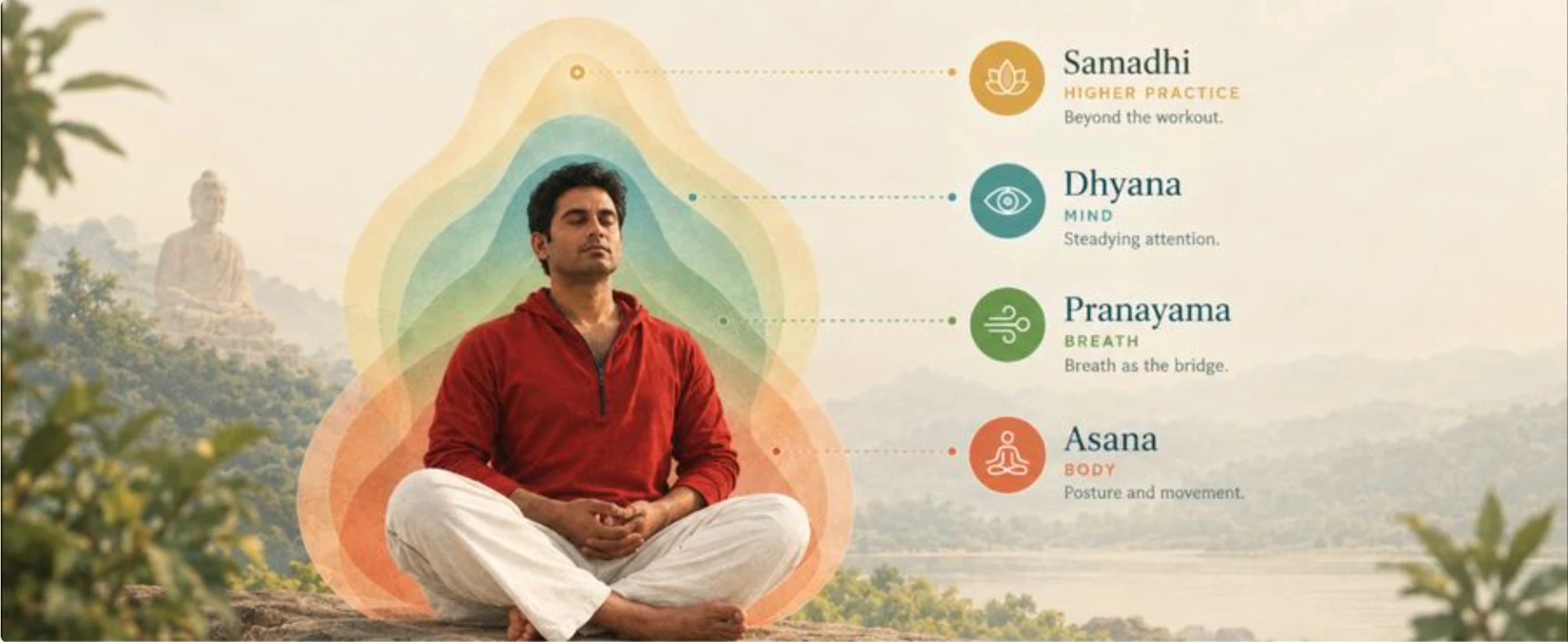
Look closer
The physical practice most people meet first — the shapes, the stretching, the strength and movement.
Where most people begin.
Breath practices that connect movement with attention and inner awareness.
Where the practice begins to turn inward.
Concentration and meditation — the practice of observing and training attention.
Where practice becomes less about movement and more about awareness.
The traditional aim of yoga: profound absorption and spiritual awakening — not a fitness achievement.
The traditional horizon of the practice.
Explore a layer
Body · Asana
How the modern fitness industry transformed the way the West understands yoga.
6 min read
Breath · Pranayama
Understanding Pranayama as the bridge between movement and awareness.
5 min read
Mind · Dhyana
A beginner-friendly introduction to Dhyana.
7 min read
History · Culture
A brief history of how yoga evolved across different traditions.
8 min read
Start simply
You don't need an hour, a studio, or perfect flexibility to begin.
Pranayama
A single minute of slow, even breathing to settle before anything else.
Asana
The stillness underneath every standing posture — feet, spine, breath.
Dhyana
Nothing to do but notice when your mind has wandered, and return.
Body · Mind
A slow pass of attention from feet to crown, one region at a time.
Curious?
The more ezyogi learns, the easier it becomes to explore yoga through conversation.
Continue your practice
Books, mats, props, and other resources selected to help you explore further.
Higher Practice · Samadhi
A classic reference on asana practice and alignment.
Body · Asana
A firm, non-slip surface for standing and floor postures.
Mind · Dhyana
Supports an upright, comfortable seat for sitting practice.